How we make a book worth keeping.
The short version: heavy paper, casewrap binding, a continuous cover, and prose set by a model that reads like a writer. The long version is below.
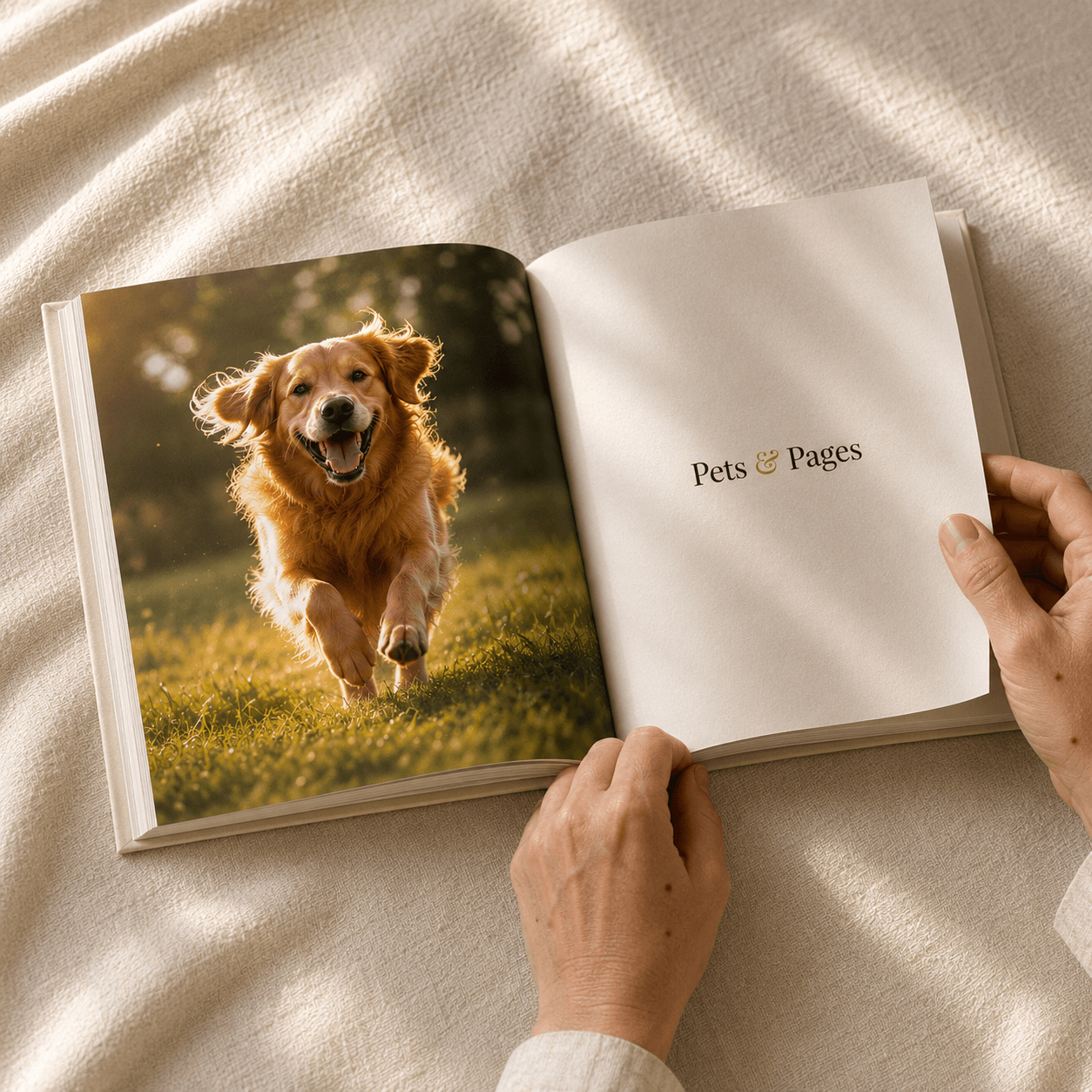
e make books. The kind with spines and titles and a place on the shelf where the good things live. Each of those is a choice about paper, binding, ink, language. We make them on purpose.
We chose heavy paper because photographs of pets ask for warm tones and rich blacks, and because pages worth turning need to feel like something. We chose covers without spine text because a book on a shelf reads better when the eye isn’t pulled to a name. We chose a wraparound cover so the back of the book can carry a dedication rather than a barcode.
Every one of those is an editorial choice, the kind a small press would make for a poet they believed in. We make them, all the same, for an animal you live with.
The paper.
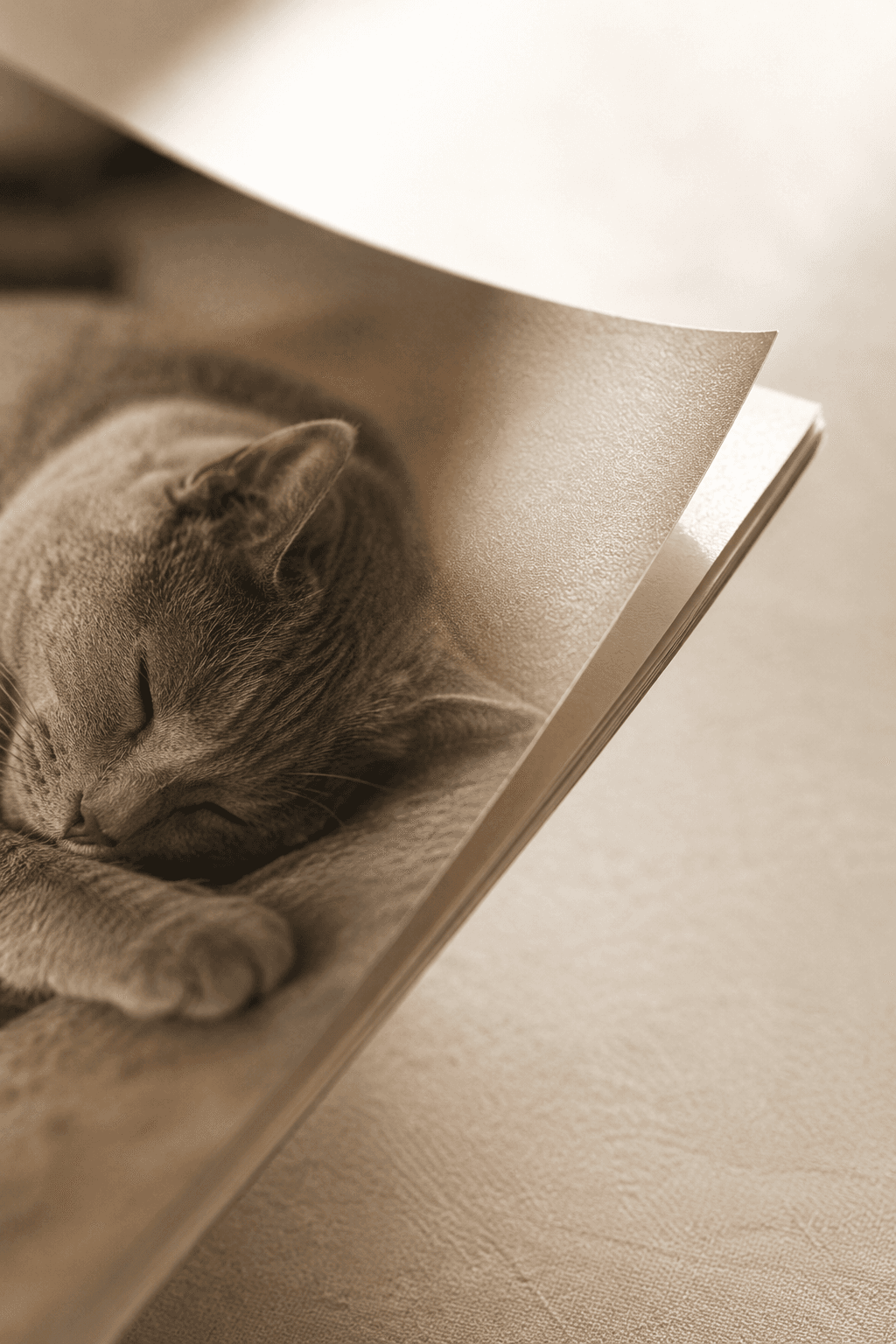
Eighty-pound coated stock, chosen because skin tones, fur, and grass need a paper that holds color true. The weight matters too: thin paper feels like a brochure; this feels like a book. The pages stand up to being read across years.
The binding.
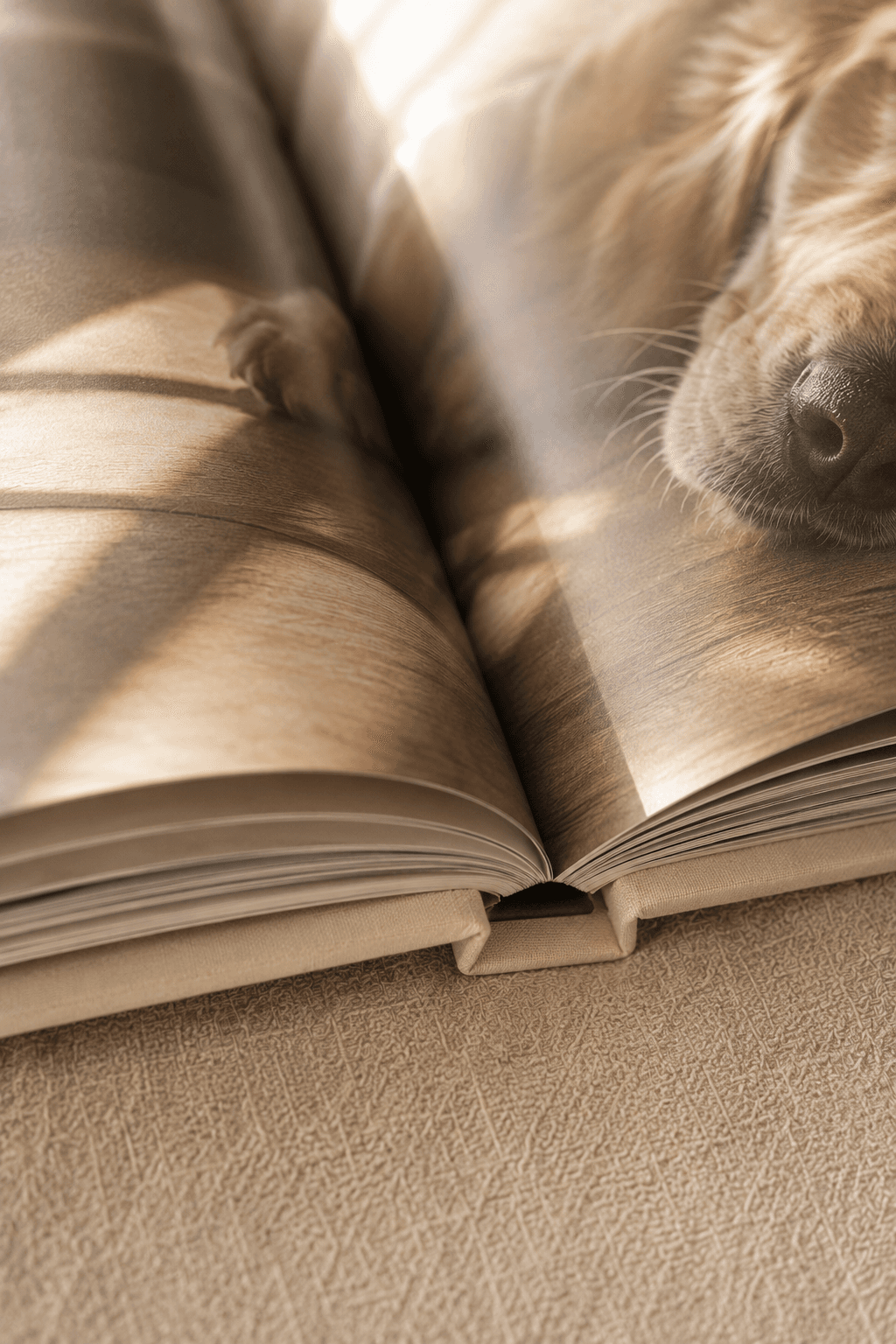
Two printed formats, two ways to live with a book. The softcover is coil-bound and lies completely flat, the book you read to a child in your lap, or set open on a counter while you cook. The hardcover is casewrap with a six-millimeter spine. It sits on a shelf the way a small monograph does, and the cover is treated as one continuous canvas rather than three printed panels.
The cover.
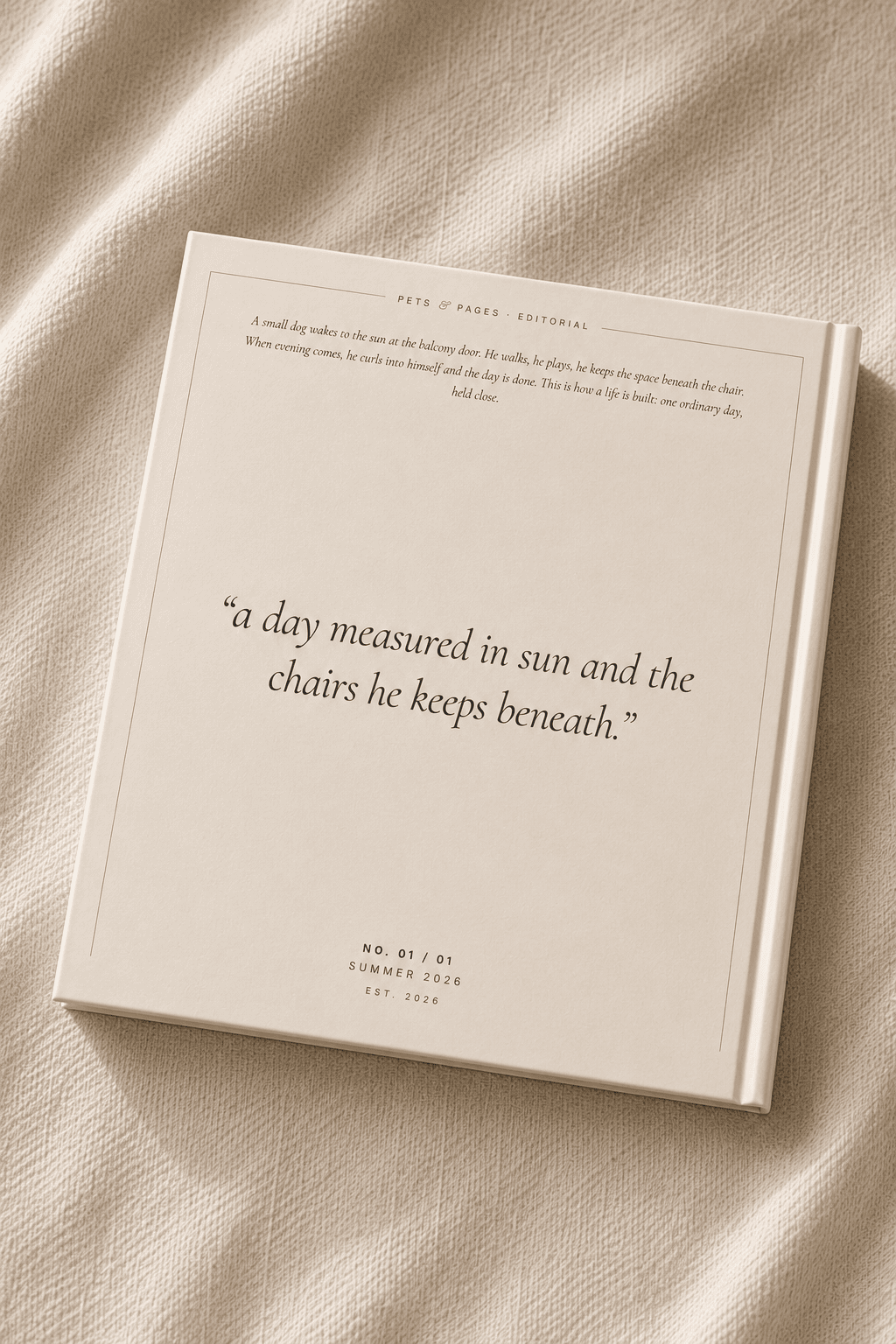
A single image wraps from back to front, crossing the spine without interruption. The spine itself stays unprinted. A book on a shelf earns the reader’s attention by presence. The back carries a quiet dedication line set in italic Cormorant: the person, the pet, the year. Small, intentional, the last thing the reader sees when they close the book.
The press.
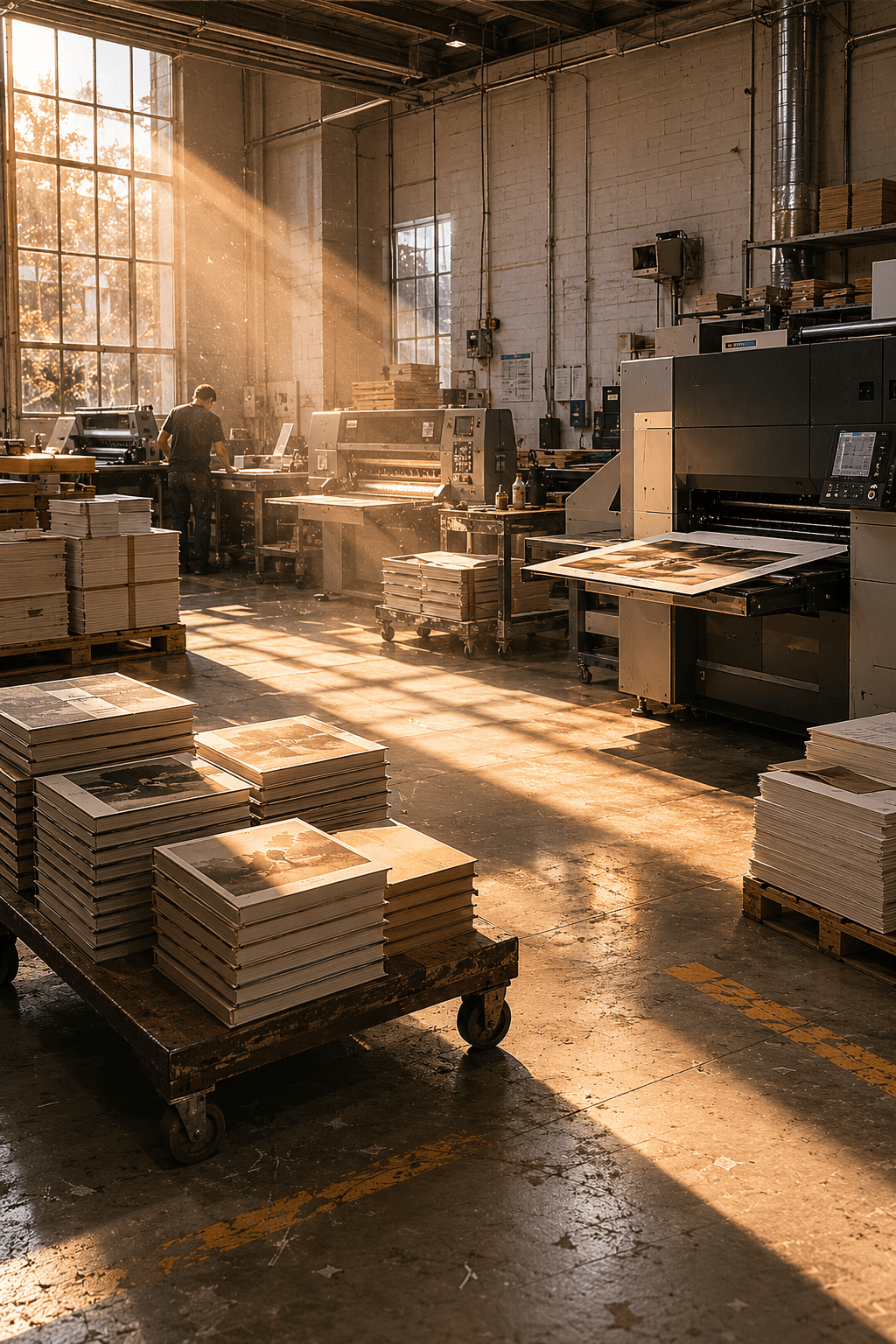
Each book is made in a real place. Photographic digital printing throughout — full color, interior and cover, on coated stock, bound to spec, packed and sent, printed the day you order, made on demand. The artifact that arrives is the kind a small press would produce for itself.
Set by a model trained on published books.
The prose is composed by a language model tuned on published works, pages a writer would recognize, in the cadence of an editor. Every preview is reviewed by you before anything goes to print, and you keep every right to the images and the words.
The first chapter is on us.
Two minutes to begin. Storybook or Keepsake, both made the same way.