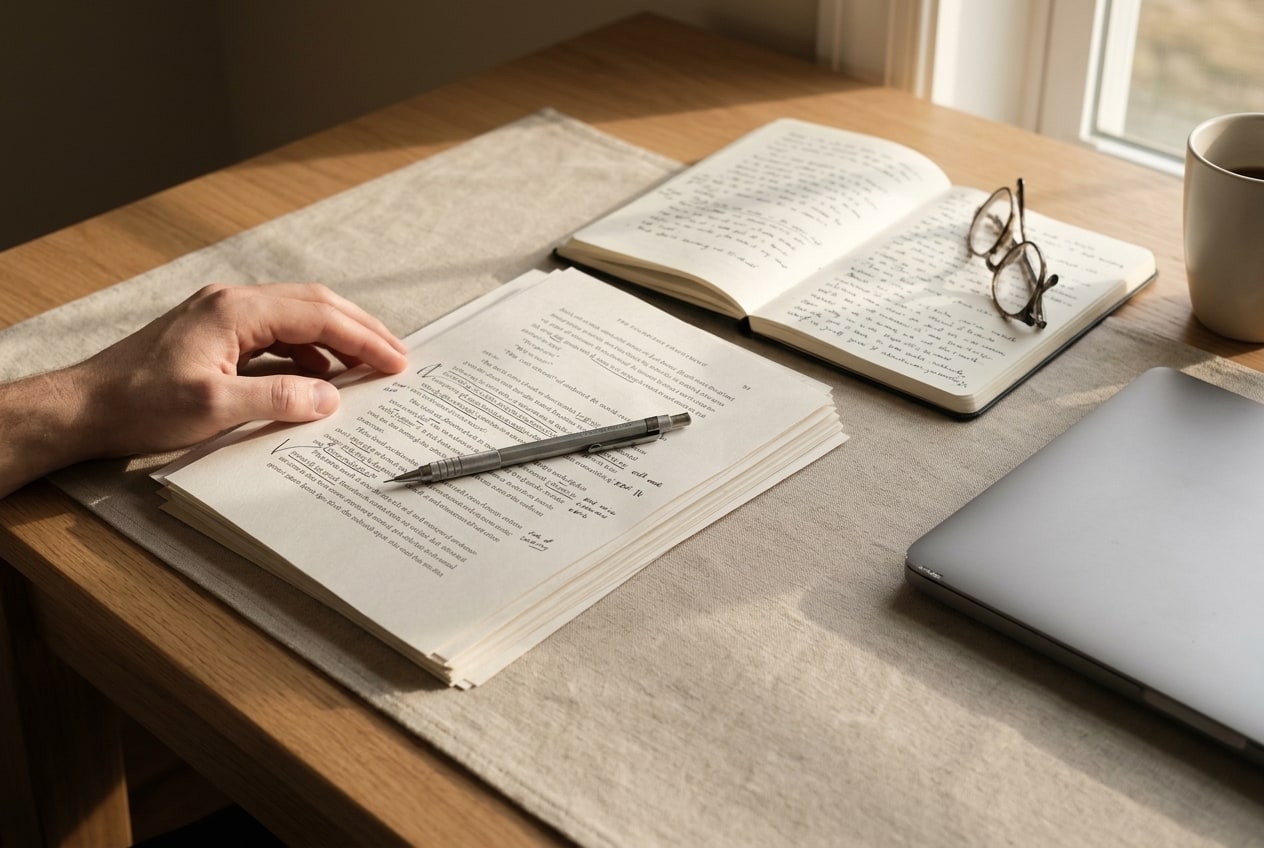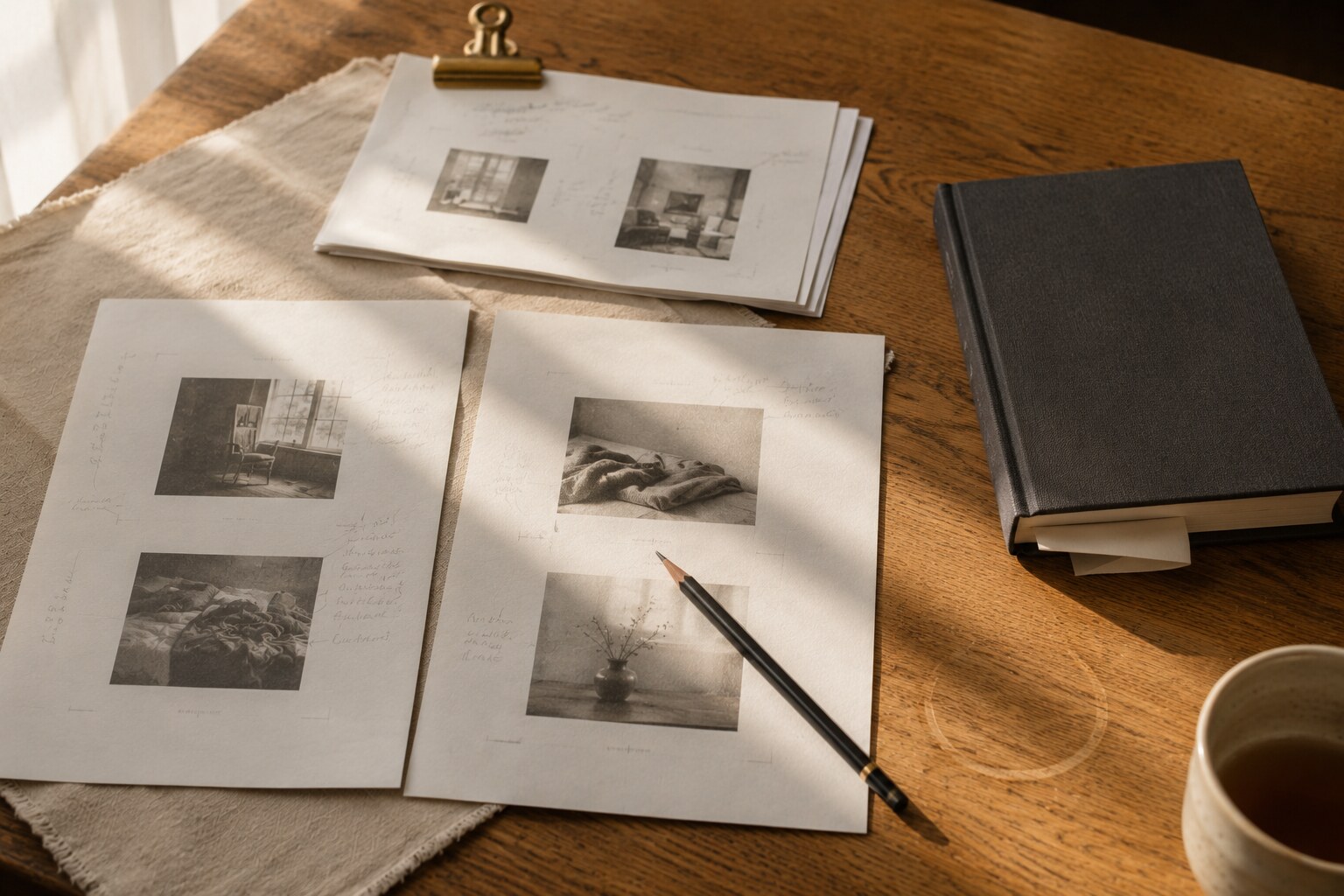
A small press is a printing operation that publishes fewer titles on purpose than it could. The catalog at Pets & Pages is short by design: one format in two modes, a chosen list of shipping destinations, and a working rule against publishing anything we would not read aloud at home. The economic argument follows from the editorial one, and the operational shape of the press follows from both.
What "small press" means in 2026
The phrase has carried different freight at different times. In the twentieth century a small press meant a printer of paper proofs and chapbooks for a regional readership, an operation working under the radar of the trade houses. Print-on-demand changed the shape of the term. A small press today can print one copy of a title for a household in Adelaide and another for a household in Glasgow, with no warehouse and no stock cycle. The new limit is editorial: how many books a press is willing to put its name on. A press that prints anything it can sell loses its name within a season.
The American Pet Products Association reported US pet industry sales of $147 billion in 2023. The supply of personalized books, photo albums, custom portraits, urns, and household keepsakes is enormous. The bottleneck for a serious press is editorial, never commercial.
A small press in 2026 is defined by what it declines to publish. A working list:
- Books we would not read aloud in our own kitchens.
- Books written for a register we cannot reliably match.
- Books built on materials that will not hold their shape over decades.
- Books shipped into markets we do not understand well enough to support.
- Books we cannot proof against the standard we set when the press opened.
The list is the press's actual editorial floor.
The catalog: one format, two modes
The Pets & Pages catalog is short on purpose. Two modes, three format choices, and a working rule that every title clears the same editorial bar before it prints.
| Mode | Reader | Register | Object |
|---|---|---|---|
| Storybook | The household, in everyday reading life | Editorial, present-tense, warm | Casewrap hardcover or coil-bound softcover, heavy paper |
| Keepsake | The household, marking a companion | Quieter editorial, restricted word list | Same materials, slightly slower pacing on the page |
(See why we write pets in the present tense for the voice rule that runs through both modes, and what is a personalized pet storybook for the category definition the catalog sits inside.)
The catalog could be wider. A press of any size, with AI-assisted composition and print-on-demand pipelines, could open dozens of titles next year. The press would lose its editorial floor inside a quarter. The narrow catalog is the floor.
A note on what we ship and where
The press ships globally in English. The list of countries we serve is the operational expression of what we believe we can support: payment infrastructure that holds, print partners we have proofed against, customs frameworks we have read carefully, and a customer-care window we can staff inside our own working hours. Where any of the four is missing, we hold the destination back until it arrives.
A single example, named openly. Mainland UAE sits on our exclusion list because Pets & Pages operates from a UAE free-zone license, and selling into the mainland requires a different license class we have not yet taken. The constraint is regulatory. A household in Dubai who wants the book and has a mainland address gets a clear answer at the cart: this address is not yet on our shipping list, here is the one-sentence reason, and we will write back when it changes.
Every additional country adds entries in the operations ledger: tax registration, customs rules, return procedure, complaint escalation path. A press that adds shipping destinations the way a software company adds locales loses the ability to answer a customer's question by hand inside a few quarters.
The press answers questions by hand. That is part of what the press is for.
Restraint as an editorial choice
Restraint, in editorial work, is the daily decision to write less than the page will hold, ship less than the catalog could carry, and design less than the form will technically permit. It is the harder of the two pressures to defend, because the surface of the press looks the same whether or not the restraint is in force.
A 2022 Pew Research Center report on US book-reading habits found print remained the most-read format, with roughly two-thirds of US adults reading a print book in the prior year. The reasons readers give for print are the reasons readers have always given: an object that weighs something in the hand, a page that ends where the bookmark sits between two leaves of paper. A press that wants to make books that get kept has to commit to the same boundedness in its own catalog.
The editorial choices a small press makes in 2026:
- Publish one title at a time, fully. Composition, proof, photo selection, prose review, print test, ship test. Each stage finishes before the next title begins.
- Cap the number of formats. The press ships a digital PDF, a softcover, and a hardcover. A photo print, a wall calendar, and a card set would each work commercially. They would also dilute the editorial floor.
- Decline tones we cannot hold. The keepsake mode publishes the list of words it works against. (See why we write pets in the present tense for the editorial reasoning.) The decision is structural, set when the press opened.
- Write the page the way a household talks. The kitchen-table register, the voice a household uses when the household is at its best. A page that reads like a card from a stranger gets rewritten before it prints.
- Hold the materials line. The case for the eighty-pound page is the press's working material standard. Lighter paper has a lower per-book cost; it is also a different object in the hand.
Restraint at this size is the working method. The press is judged by the books it declines as much as by the books it ships.
The press answers questions by hand. That is part of what the press is for.
Making one good thing well
A press of one format, two modes, and a chosen shipping list is solving a small problem fully. Solving the larger version of the same problem is work for a different operation at a different scale. The household ordering a storybook for a senior dog gets a book at the print-craft tier, written in the register that suits the dog's life, on paper that will hold for decades, shipped to an address the press can support.
The household reads the book aloud, opens it again the following winter, and sometimes photographs the book on a kitchen table to send to a sibling who has not yet seen it. (See photographing the pet you live with for the photo-selection work that begins every book.) The press's working theory is that an object made well, at single-household scale, earns the household's reading life in a way a catalog full of adjacent objects cannot.
Everything else the press could ship, we have declined. The decline is the catalog.