The photographs that earn a place in a household keepsake share one quality. They show the pet as the household actually sees them. Light through a kitchen window. A paw crossing a worn rug. The half-second of attention before the head turns. Photographing the pet you live with is the work of paying that kind of attention on purpose, with the phone you already carry.
What a household keepsake photograph is for
A pet photograph does one of two jobs. It either documents, holding a moment of life still on the page, or it composes, arranging an image for an effect. Both are valid; the keepsake book leans heavily on the first.
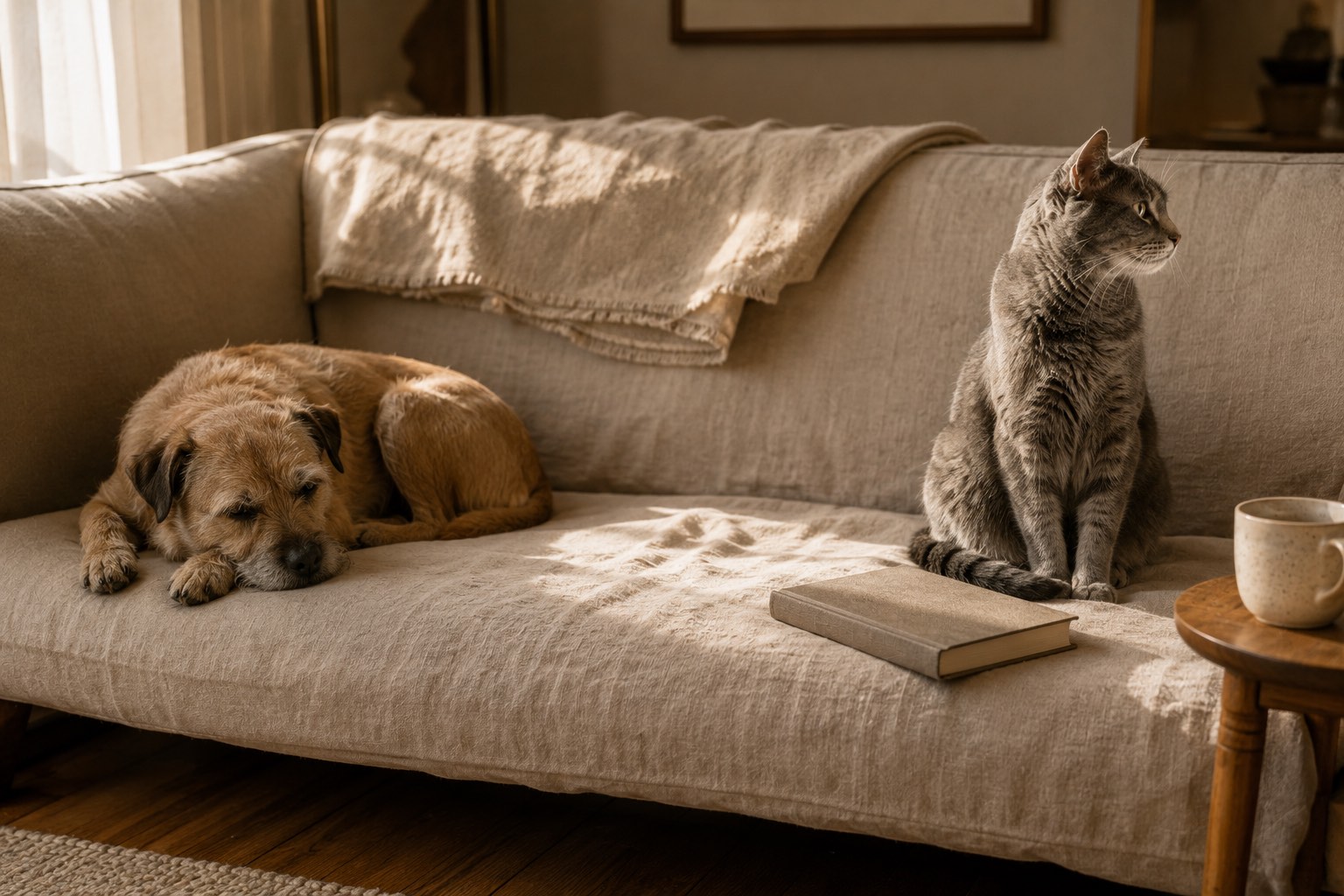
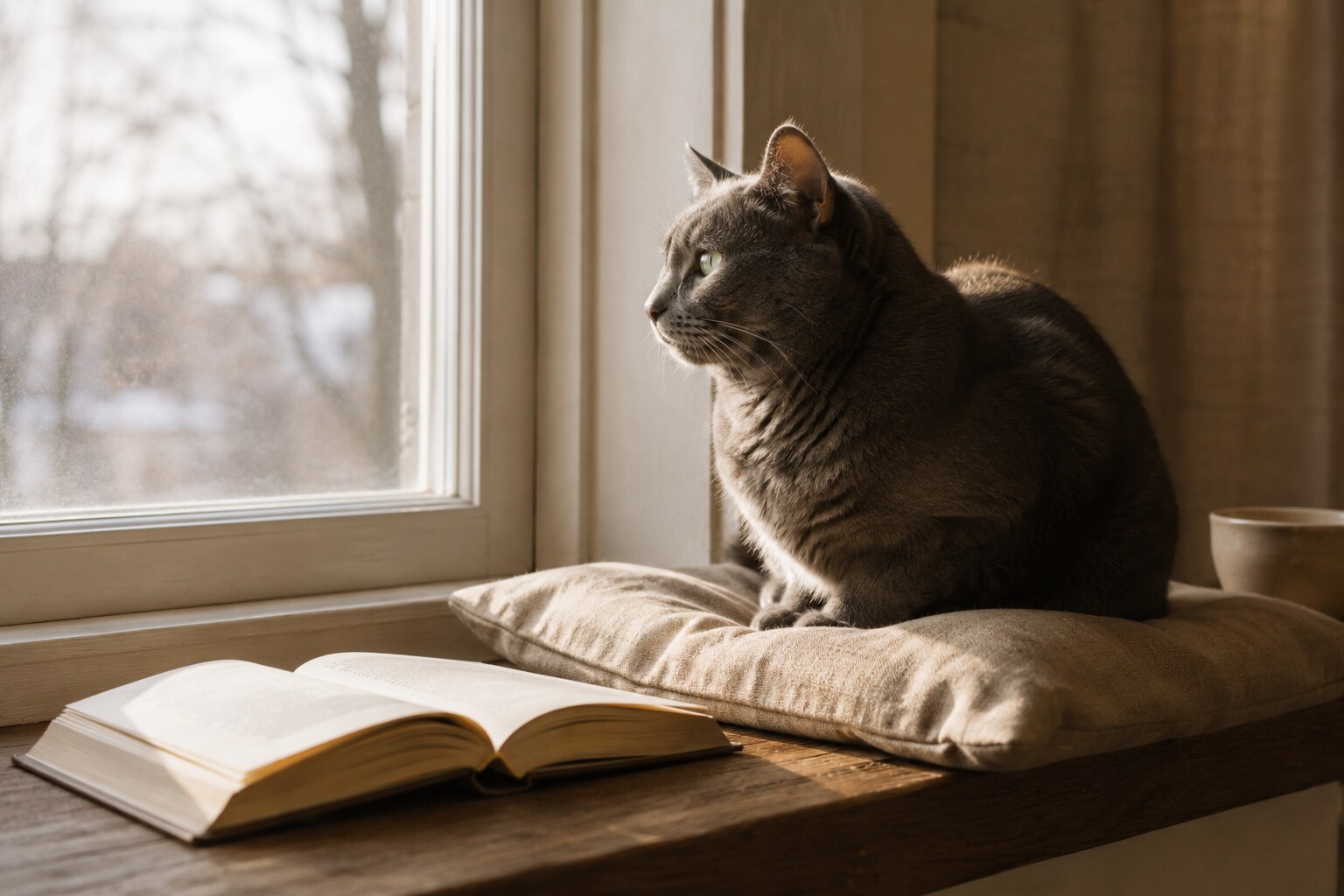
A documented photograph is the unposed one. It captures the dog as he is at half past three on a Tuesday, asleep in the wedge of light that crosses the rug at this hour and no other. The cat in the windowsill where she always sits. The dog standing in the kitchen with one ear forward, listening for the spoon against the bowl. These photographs show what was true in a particular room on a particular afternoon.
A composed photograph is the arranged one. The dog in a sweater on a clean background, looking at the lens because the photographer asked. The cat held up to the camera for the holiday card. These photographs can be beautiful. They do different work. On the page of a keepsake book, the composed photograph performs once and then quiets. The documented photograph keeps speaking.
A useful rule of thumb: a household will see its own keepsake book several hundred times across the decade after the book ships. The photographs that hold up at the three-hundredth reading are the ones that show the household at home with the pet, with no audience implied.
Pew Research's 2023 study on pet ownership found that 51% of US pet owners consider their pet to be as much a part of their family as a human family member. The keepsake book is a small ritual that takes the report seriously. The work of photographing the pet you live with is the work of producing the evidence the report is true.
The five ordinary moments worth keeping
The five photographs that almost always earn pages in a finished keepsake, in the rough order a household paying attention will capture them:
- The pet asleep in their own preferred shape. Every dog and every cat has a shape they settle into when no one is watching. The shape is specific. The corner of the sofa, the spot on the rug, the angle of the body, the way the tail wraps. This photograph is taken from across the room, with light coming through a window. The pet has not been moved. The photograph holds a piece of the household's actual geometry.
- The pet waiting. The half-step before the walk. The pause at the foot of the bed at six in the morning. The patient sit by the food bowl at half past five. Waiting is a quiet kind of attention, and the photograph of it carries that attention into the book.
- The pet alert. The half-turn of the head at a sound only they hear. The ear forward. The held breath of an animal listening to something on the other side of the door. These are the photographs that show the pet as someone with a private interior life, which is what the editorial register of the keepsake book is built to honor.
- The pet in slow motion. The walking shot. The slow patrol of the kitchen at first light. The way the cat enters a room, low to the ground, in no hurry. Slow motion is more characterful than fast motion. The book wants the gait, not the action shot.
- The pet with one other household member. A second figure in the frame, often partial: a hand on the back of the head, a foot under the blanket the cat has chosen, a child's elbow against the dog's shoulder. The photograph of the pet with someone else makes the household visible in the book without ever asking a human face to perform. (See books for more than one companion for the editorial argument on composing a profile of a pair.)
None of these five photographs requires the pet to do anything. The photographer's whole job is to be in the room with a camera ready and a willingness to wait.
Documentary or composed: a working comparison
The distinction between documentary and composed photography is older than pet photography, and the keepsake book's argument rests on it. The table below sets the two registers side by side.
| Quality | Documentary photograph | Composed photograph |
|---|---|---|
| Pet's awareness of camera | None or incidental | Direct |
| Direction by photographer | None | High |
| Lighting | Available light | Arranged or supplemented |
| Setting | The pet's actual environment | A staged or simplified background |
| What the image carries | Evidence of a life | A performed image |
| Reading life on the page | Long | Short |
| Best use | Keepsake book interior, family album | Holiday card, single-image gift, framed portrait |
Both columns hold real work. A holiday card is a composed photograph at its best. A framed portrait above the mantel is a composed photograph at its best. The book a household reads aloud is mostly a sequence of the left column.
The decision sounds simple. It is rarely easy. The composed photograph is the one we have been taught to take. Every family snapshot from the last century, every birthday photo, every school portrait, every Instagram selfie has trained the household to ask the subject to face the camera. The discipline of pet keepsake photography is to put the phone down when the dog turns toward the lens, wait until he turns away, and then raise the phone again. The best photograph of the dog is almost always the one taken in the second before the dog noticed the camera.
The best photograph of the dog is almost always the one taken in the second before the dog noticed the camera.
The room does half the work
A photograph of a pet at home is, in equal measure, a photograph of the room. The dog is sleeping on the rug, but the rug is doing real work too. The cat is in the windowsill, but the windowsill is the frame of the photograph as much as it is the cat's perch. The household photographer who learns to read the room learns most of the craft.
This means three things in practice.
Light. The best household pet photography is daylight photography. Side light from a window at mid-morning or late afternoon shows the texture of fur, the curve of a paw, the depth of an eye. Overhead light flattens. Camera flash flattens further, and it asks the pet to perform; the eyes shrink and the body stiffens. The household photographer learns the room's two or three good light hours and plans accordingly. The book is full of those hours.
Surface. The rug, the sofa, the wooden floor, the windowsill, the patch of garden. These surfaces are character in the photograph. A book that includes the household's actual materials reads as truer than a book that crops everything tight to the pet. The wood floor under the dog is part of the dog, in the sense that the page is reading a relationship between an animal and a home. Heavy paper in print holds surface texture well; see the case for the eighty-pound page for the material reason this matters on the printed page.
Time of day. Pets keep a small calendar. The cat is in the kitchen at six in the morning and on the bookshelf at four in the afternoon. The dog is at the door at three when the school bus passes. Knowing the calendar means knowing where the photograph lives. A household photographer wandering the house at a random hour produces a much weaker set of frames than one who visits one specific window at one specific hour.
The household photographer's discipline is attention to the room.
A short method for the household photographer
For households planning to make a keepsake book in the next year, a working method that has settled at the Journal:
- Start a folder on the phone called "Book." Put one photograph in it every day for a month. Some days the photograph will be bad. Most days it will be ordinary. By the end of the month, the folder will hold the five or six photographs the book actually needs.
- Shoot in the rooms the pet uses. The kitchen, the doorway, the chair, the bed, the patch of garden. The keepsake book wants the household's geography. Drop the impulse to take the dog somewhere more photogenic than the house.
- Get low. Many of the best pet photographs are taken from the height of the pet. The camera at sofa-cushion height changes the relationship between subject and lens. The pet stops sitting below the human and becomes the center of the frame.
- Wait for the off-beat. The pet looking away is more characterful than the pet looking at the camera. The pet between two postures (mid-stretch, mid-yawn, mid-sit) is more characterful than the pet in either pose. Patience is the technique.
- Take more than you think you need, for the reason you do not expect. The household photographer needs volume for the small ordinary frames the household photographer will discard most of. A folder of two hundred photographs yields five that earn a page. The math is brutal and reliable.
- Photograph the pet doing nothing. A pet looking out a window, a pet asleep on a rug, a pet sitting under a chair. The photographs of doing nothing are the ones the book remembers.
- Stop when the pet stops. The moment the pet is conscious of the camera, the photograph is over. Lower the phone. Wait. The pet will return to their own life within a minute or two, and the next photograph will be the one worth keeping.
These seven rules produce source material. The book that arrives a year later is the result of which photographs the household keeps from the folder of a hundred.
A note on phones, and on the camera you actually have
Most household pet photography in 2026 is phone photography, and the phone is a sufficient instrument. A modern phone camera at native resolution holds enough detail to print at print-craft tier on the eighty-pound page. The argument that you need a "real camera" to make a keepsake book is outdated.
What the phone struggles with is patience. The phone is designed for the quick snap, the immediate share, the burst. The household photographer's discipline is to use the phone slowly, as if it were a film camera with twelve frames left. Open the camera app before the moment arrives. Watch the pet for thirty seconds before raising the phone. Lower the phone when the photograph is taken. Resist the burst mode for documentary work; the burst produces forty frames of the same thing, none of them quite considered, all of them slightly soft.
A small practical note. Most phones in 2026 default to a 4:3 aspect ratio in the photo app, which prints cleanly to standard book trim sizes. The 16:9 video aspect ratio crops badly to print. Set the photo app to 4:3 for keepsake work and ignore the wider crops.
What separates a photograph from a portrait is the willingness to wait.
What the page learns from the photograph
A keepsake book is the household's photographs given paper and binding and a voice. The voice gives the photographs context; see why we write pets in the present tense for the editorial argument on that voice. The photographs give the voice evidence. The two together make a record of a relationship.
The photograph is the load-bearing element. A keepsake page can hold prose that is plain. It cannot hold a photograph that is performed. A composed photograph on the page makes the prose feel insincere by association, even when the prose is doing real work. A documentary photograph on the page lets the prose breathe; the household reads the page, and the photograph confirms the prose was telling the truth.
For a fuller treatment of how the photograph relates to the prose, and the editorial gap between describing a pet and writing one as a character, see the difference between a character and a caption. For the wider category context of what these books are and how they sit in the market, see what is a personalized pet storybook.
The most useful instruction the Journal can give the household photographer is the simplest. Watch the pet for the photograph the pet would not have noticed. Take it. Put the phone down. The book that arrives a year later will be made, in large part, from the folder of those small unposed frames.
Most households underestimate the volume of photographs they already have that would earn pages. Open the camera roll, sort by the rooms the dog or cat uses most, and the first round of editing is already most of the way done. The book is half written before the household has thought of it as a book. The editorial work to follow is to choose, to sequence, and to caption. The photographic work is to have paid attention.
The pet does not need to perform for the book. The photograph that earns its page is the one taken when the pet was simply at home, in their own life, in the household they actually live in.