The best photographs for a pet storybook are the ones that tell a specific story about a specific animal in a specific household. Framing, resolution, and the pet looking straight at the camera matter less than most buyers expect. Ordinary moments matter more. This is a working editor's guide to the photographs a book will actually use, and the ones a book quietly sets aside.
What "best" actually means when the destination is a book
Buyers uploading photographs for a pet storybook often reach for their best-looking photographs by instinct: the sharp portrait, the good backdrop, the flattering light. The instinct is honest and often produces the wrong pile. A photograph that works on a wall does not always work on a page.
A pet storybook is a sequence. Twenty or thirty photographs get composed into a bound narrative object. The sequence asks for scenes that let the pet be a character, not a gallery of portraits. Character comes from specificity: the particular moment, the household detail, the ordinary posture only your dog holds. See photographing the pet you live with for the editorial argument in full.
The personalized-book category has a long-form example of how much a single well-chosen variable matters. Wonderbly's Lost My Name, the personalized children's book acquired by Penguin Random House in 2018, has sold more than 4 million copies on the strength of getting one variable right: the child's name. A pet storybook has more variables and more raw material, and the raw material is your household's photographs. Getting them right is the same load-bearing choice.
The five kinds of photograph that carry a book
The most-used photographs in composed pet storybooks fall into five recognisable shapes. When a household has one strong example of each, the book has enough raw material to compose the full arc.
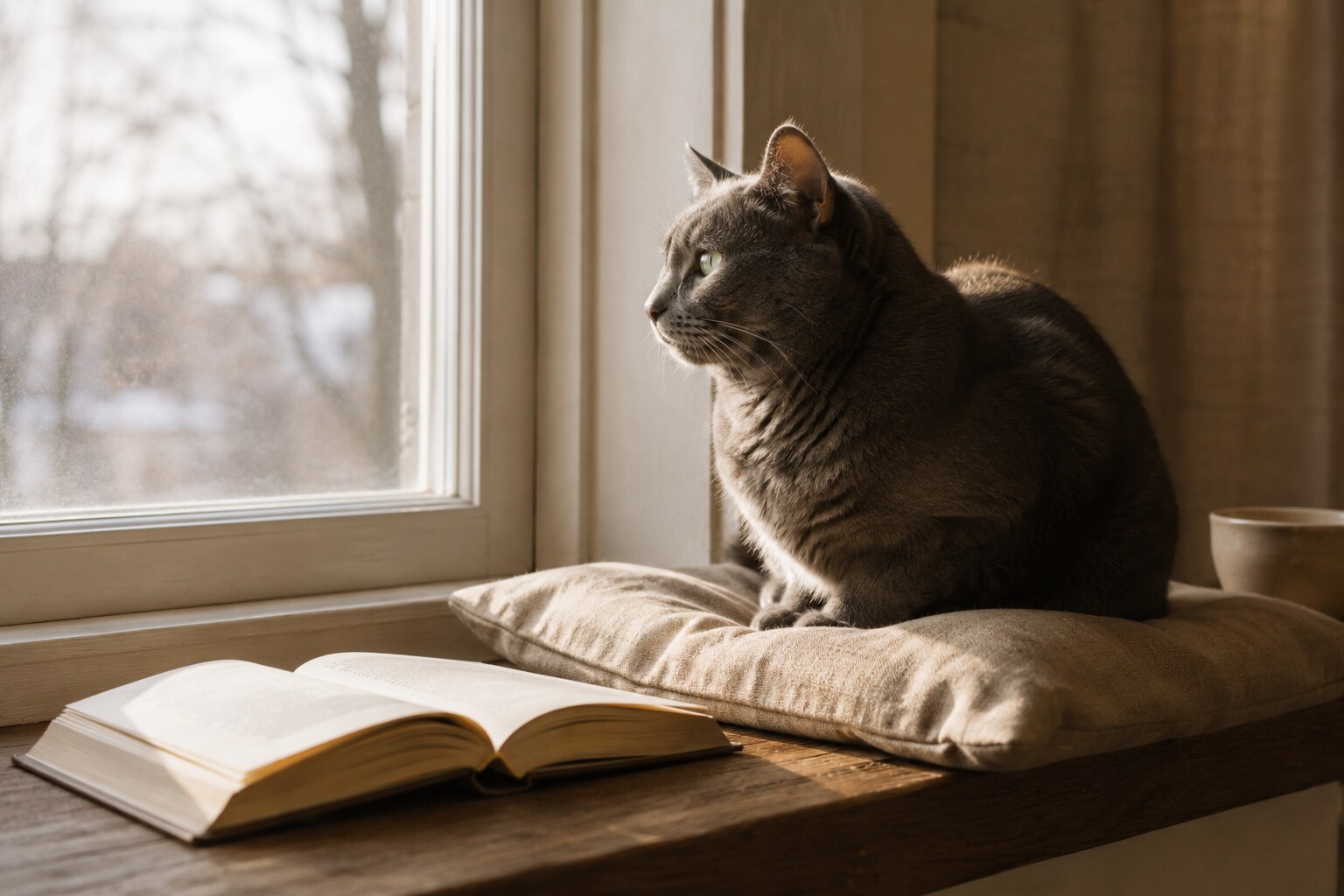
1. The threshold shot. The pet at the door, the pet at the window, the pet on the doorstep. Any frame of the pet at the edge of an inside-and-outside boundary reads as arrival or waiting. Almost every book carries one, near the opening or near the close.
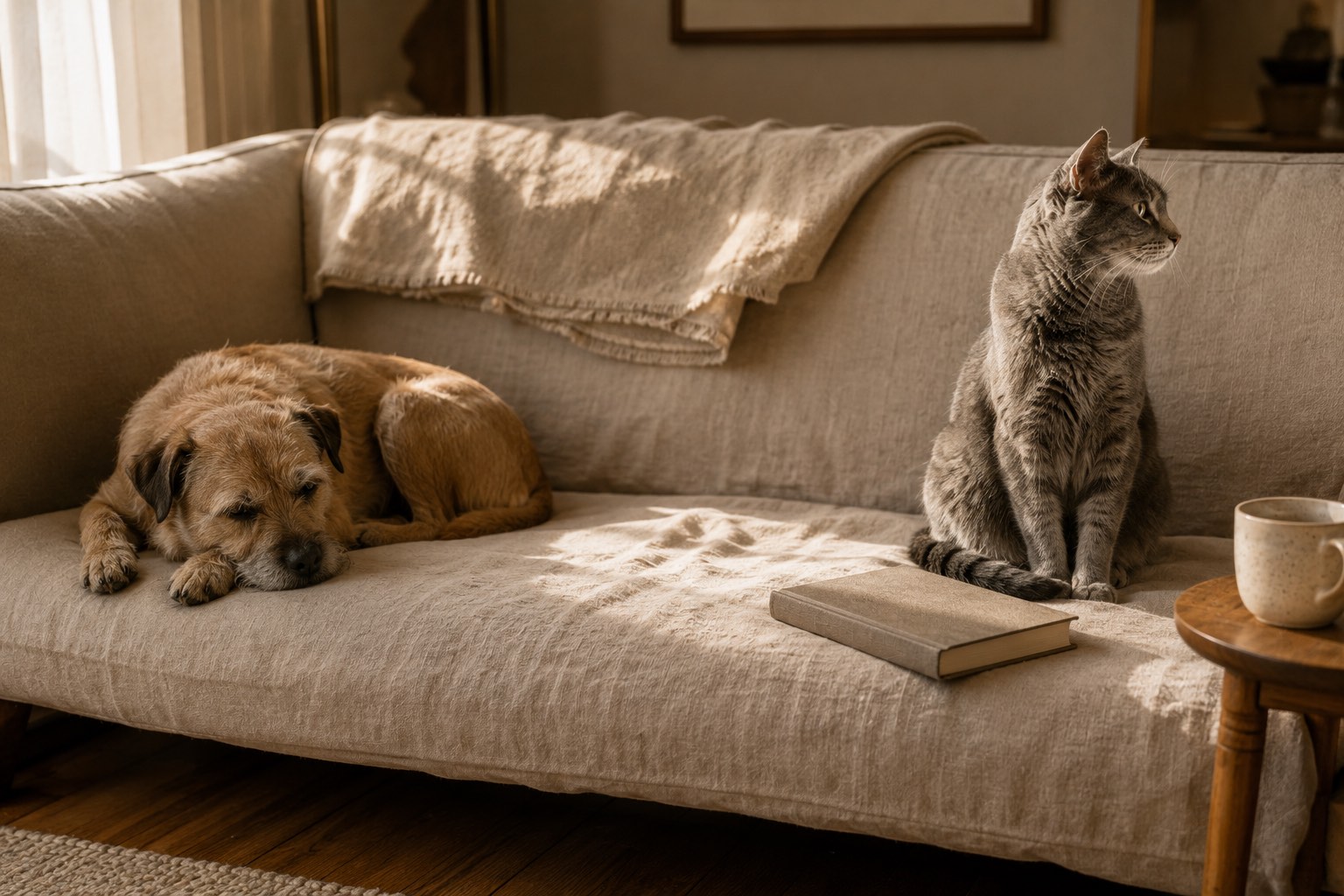
2. The ordinary posture. The pet asleep. The pet at your feet. The pet in their specific chair. The image that shows how the animal actually occupies household space. This is the shape that carries the middle of the book.
3. The relational moment. The pet next to a family member, another pet, or the household's most-used object (the sofa, the bed, the kitchen island). The photograph does not need to be posed. What matters is that the frame shows the animal in relationship rather than in isolation. Households with more than one companion should read books for more than one companion for a fuller argument on this shape.
4. The action moment. The walk, the run, the leap for a ball, the shake after a bath. One or two of these give the sequence tempo. Too many make the book feel like a sports magazine.
5. The quiet gaze. The pet looking at you, looking at nothing, looking through the window. A single strong quiet-gaze photograph often becomes the endpaper or the closing plate. The book earns its stillness in the last spread.
The five categories together give an editor the material to compose a narrative. Households who arrive with fifty photographs from a single afternoon at the park have one action-moment kind and nothing else; the book that results feels one-note. Households who arrive with twelve photographs spanning the five shapes have enough for a composed volume.
What to leave out
An editor's guidance on what not to send is often more useful than guidance on what to send. Four kinds of photograph rarely make it into the printed book.
Blurry photographs. Not the ones where the pet is moving fast and the motion blur is deliberate. The ones where the focus missed entirely. Print reveals softness that a phone screen forgives. A blurry photograph reads as fine on the phone and reads as damaged on paper.
Overly filtered photographs. Photographs run through heavy Instagram-style filters, especially the ones that push saturation, crush shadows, or add fake background blur. These filters collapse the tonal range the print process needs to work with. The photograph looks flat on paper.
Group photographs with the pet as an incidental subject. Family photographs where the pet is somewhere in the background rarely serve. The pet has to be the frame's centre, or at least the frame's clear subject. If the pet's face takes up less than a fifth of the image, the photograph is doing something else.
Studio-style portrait photographs. Professional pet portraits, taken against neutral backdrops with flash, are often the sharpest and highest-resolution photographs a household has. They also read as commercial photography rather than household record. A book composed largely from studio portraits reads like a pet-modelling catalogue. These photographs have their own uses; a storybook is a different destination.
The technical minimums that hold up in print
Composition and story matter more than technical specifications. Technical specifications still matter enough to name.
Resolution. Household smartphone photographs from the last five years are almost always high enough resolution for print. A modern phone captures at 3000 pixels wide or more; a full-bleed book page needs roughly 2500 pixels at the intended print size. Older phone photographs or heavily-cropped photographs can fall short. As a working rule: if you can zoom in on a photograph on your phone and still see clean detail on the pet's face, the resolution is enough.
Lighting. Natural light carries almost every household pet photograph. Window light, garden light, walk-in-the-park light. Photographs taken under a single overhead ceiling light, or with a flash fired directly at the pet, tend to have flat shadows and hot spots. The book prefers softer, directional light almost every time.
Framing. Give the pet a little room in the frame. Photographs where the pet's head is cropped at the top or ears are cropped at the sides limit what a composer can do with the layout of the book. A little breathing room around the pet gives the layout options that a tight crop forecloses.
File format. The original photograph, as it came off the phone or camera, always beats a screenshot or a re-shared copy. Screenshots have already been compressed once; re-shared copies have been compressed twice. Send originals from your camera roll where you can.
None of this is exotic. Almost every household has thirty or forty photographs that meet the minimums without any special effort.
A short editor's checklist
For a household getting ready to upload photographs for a storybook, a working checklist:
- Open your camera roll and pull twelve to twenty photographs of the pet, across at least three of the five categories above.
- Include at least one threshold shot, one ordinary posture, and one quiet gaze. These three shapes carry most of the book.
- Skip any photograph that is out of focus, heavily filtered, or shot with a direct flash.
- Prefer natural light and specific household detail over studio-perfect portraits.
- Include one or two photographs that are of the household without the pet: the couch the pet sleeps on, the kitchen door the pet waits at, the leash on the hook. These become the establishing frames.
- Send originals from the camera roll, not screenshots or re-shared copies.
The books that come back to households and get opened repeatedly almost always trace back to a photograph selection made along these lines. See the case for the eighty-pound page for the material side of the same argument: the paper is chosen so that the photograph you chose carries weight in the hand. For the writing-side complement, see the difference between a character and a caption: the same photograph benefits from prose that treats the pet as a character rather than a subject with a label under it. For the category context, see what a personalized pet storybook is.
The photographs a household already has are almost always enough. The editorial move is patience with the pile: spread it out, look at the shapes it contains, and pick the ones that let the pet be themselves on the page.