Choosing between a hardcover and a softcover personalized pet book is really a choice about how the household intends to read the book. Hardcover asks for the shelf; softcover asks for the lap. The materials, the price, and the reading life follow from that one decision, and most buyer regret in this category comes from getting the reading intent wrong.
What the choice actually decides
Format is a working decision that settles four things at once: where the book will live in the house, how often it will be opened, how many hands will hold it, and what kind of object it becomes across the years. A hardcover treats the book as a small monograph. A softcover treats the book as a working companion.
The frame that helps most buyers is to ask which of two verbs applies: display or use. A book on a shelf is displayed; a book at the kitchen table is used. Both are honest reading lives, and the materials that carry each verb are different. The choice below is about matching the material to the verb.
Hardcover: what it does well
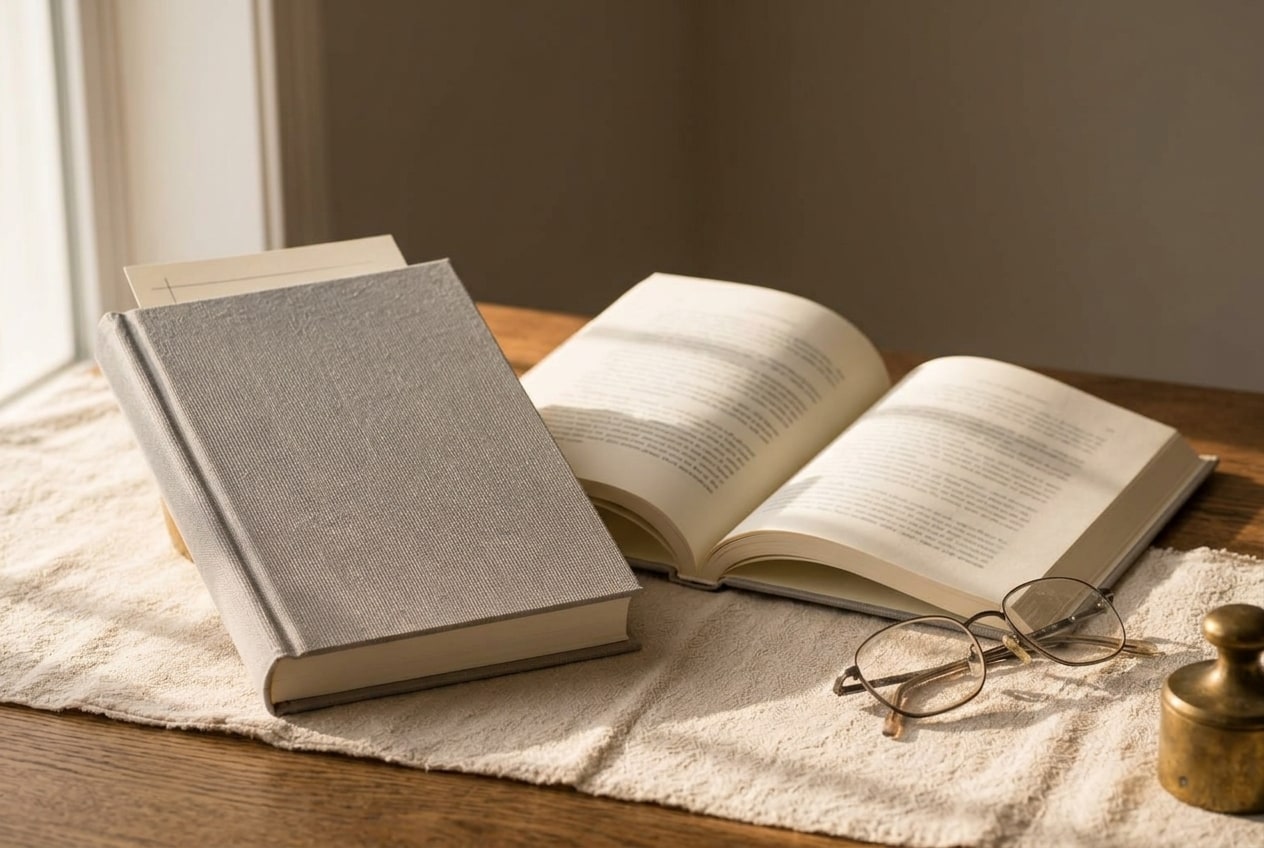
A hardcover personalized pet book sits in the tradition of the small-edition photo book, the wedding album, the family monograph. The board covers give the object shelf-standing weight. A casewrap treatment, in which printed cloth or paper is wrapped continuously around the front cover, spine, and back cover, reads as a single composed artifact rather than a printed pamphlet. The spine is stitched and glued, and it holds its shape through decades of shelving.
The reading experience favors slower, more considered turning of pages. The heavier board makes the book harder to fold fully open unless it is stitched with a layflat binding; readers tend to hold it more like an art book than a picture book. Hardcovers pair well with heavier text-block paper (eighty-pound or higher), because the additional stiffness of the pages sits inside the weight of the cover in a way that reads unified.
The tradeoffs are price and portability. A hardcover of the same trim size runs roughly forty to fifty percent more than the softcover equivalent, and the added weight makes it a less practical choice for a book that will travel.
The case for the eighty-pound page lays out the paper-weight argument that hardcovers depend on, and a short history of the casewrap cover walks through the construction detail if the object is going to sit on a shelf for years.
Softcover: what it does well
A softcover personalized pet book, made well, is a different kind of object. It sits closer to the picture book, the small paperback, the working notebook. The cover is a heavier card stock (roughly 100 lb cover weight for a print-craft-tier softcover) with a finish that resists thumb-marking. The binding is usually perfect-bound (glued at the spine, flat cover) or coil-bound (wire coil at the spine, allowing the book to lie completely flat).
The reading life favors repeated, casual openings. A softcover lies on the coffee table, gets picked up in the kitchen, travels in a bag. Children can hold it without help. The book that a household actually reads to a five-year-old at bedtime, night after night, is almost always the softcover.
The tradeoffs are shelf presence and long-life integrity. A softcover does not stand on a shelf next to hardcover volumes with the same visual weight. Across a decade of use, the softcover will show its wear more visibly than the hardcover: the corners round, the spine creases, the cover finish softens where hands have held it. Households comfortable with a book that ages honestly usually welcome this; households expecting the object to stay pristine sometimes do not.
Coil-bound softcover is a specific case worth naming. A coil binding gives the book a full 360-degree layflat opening, which makes it the format of choice for a book intended to be read aloud with the pages held flat, or for a book that a household will work with (writing in the margins, adding a bookmark to a specific spread). The tradeoff is aesthetic: the visible wire coil reads as workbook-adjacent rather than monograph-adjacent, and the book does not slot into a shelf next to bound volumes.
Side by side
A working comparison for the buyer:
| Attribute | Hardcover | Softcover |
|---|---|---|
| Best reading life | Shelf, occasional slow reading | Coffee table, repeated casual reading |
| Best household use | Considered gift, adult keepsake | Bedtime book, working family object |
| Typical price premium | Higher (roughly 40-50% above softcover) | Lower |
| Cover material | Printed cloth or paper casewrap over rigid boards | Heavy card stock, laminated |
| Spine construction | Stitched and glued; holds shape for decades | Perfect-bound (glued) or coil-bound (wire) |
| Layflat behavior | Requires layflat binding to open completely flat | Coil-bound softcover opens fully; perfect-bound less so |
| Portability | Heavier; less practical for travel | Lighter; travel-friendly |
| Long-life integrity | Cover boards protect the text block for decades | Cover softens with use; ages honestly |
| Shelf presence | Reads as a single composed artifact | Reads as a working book, not a shelf object |
| Right buyer | Household composing a keepsake or adult gift | Household reading with children, or opening the book frequently |
Both are correct formats. The buyer's job is to pick the format that fits the intended reading life.
Three questions that settle it
For most buyers, the format decision resolves cleanly against three questions.
Who will read the book, and how often? A book aimed at repeated bedtime reading with a child asks for a softcover, and often a coil-bound one. A book composed for an adult household, read on the occasional evening, asks for a hardcover.
Will the book travel? A hardcover in a bag is a weight burden. A softcover in a bag is a natural fit. A household that intends the book to move between houses, or to be carried to a friend, is choosing the softcover for practical reasons before aesthetic ones.
Is the book a gift or a household object? A gift often asks for the hardcover: the additional weight and shelf presence read as a considered purchase. A household object composed for the household's own reading can be either, and the household's own use pattern settles which.
These three questions filter about eighty-five percent of buyer regret. Households that answer them before choosing the format almost always land on the right one.
Format sets the reading life. The reading life sets the format.
Where households get it wrong
Format choice slips into regret in three predictable places.
The first: buying the hardcover as the default because it is the more expensive object, without asking whether the household will actually open it. A hardcover on a shelf that never gets read is a decoration; a softcover on the coffee table that gets read weekly is a book. The book that gets read is doing more honor to the household's investment than the object that sits unopened.
The second: buying the softcover for an adult keepsake without asking whether the household wanted the shelf presence. A keepsake for an anniversary or a milestone often carries symbolic weight, and the softcover, however well-made, sometimes does not carry that weight against the buyer's own expectation. In this case the buyer's disappointment lands on the format rather than on the book itself.
The third: skipping coil-bound softcover for a household that wants both layflat reading and low weight. Coil-bound is often skipped because it looks less traditional. Households who choose it after considering both usually stay happy with the choice.
The single practical test that resolves most of these is to imagine the book two years from now. Where does it live? Who has picked it up in the last month? If the mental image is a shelf with the book unopened for months, the hardcover was chosen for the wrong reason. If the mental image is a book on the coffee table with a bookmark halfway through, the softcover would have served the household better.
A note on materials
Format sets an expectation for the paper inside. A book cover, whether hardcover boards or softcover card stock, primes the reader for what the pages will feel like. Cheap-and-fast personalized pet books often pair a hardcover shell with a lightweight text block (60 lb or lower), and the reading experience is oddly disappointing: the book looks like a keepsake and reads like a pamphlet. Print-craft-tier hardcovers use 80 lb text paper or heavier as the working floor.
The Wonderbly personalized-book category, whose first title Lost My Name has sold more than four million copies since its 2014 launch, has settled at hardcover for children's books precisely because the household expectation for a personalized book tips toward keepsake tier. The material logic runs in both directions: the format sets the expectation, and the paper meets it.
For the wider picture of what a personalized pet storybook is, and how the format decision fits alongside the register and buyer-shape questions, see what is a personalized pet storybook. For the editorial argument on how the tense of the writing continues to hold up across the reading life the format supports, see why we write pets in the present tense.